
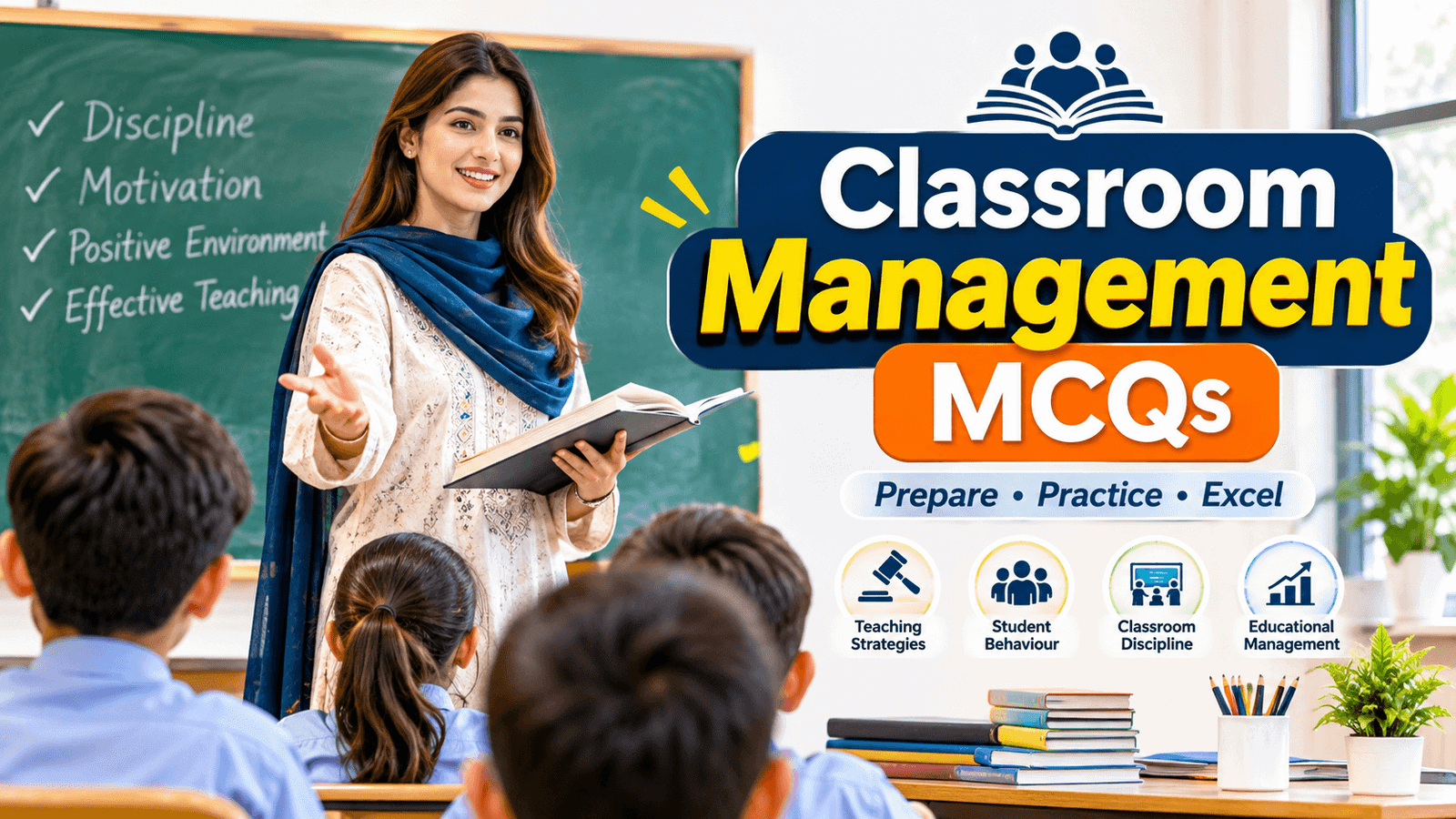
Classroom Management MCQs with Answers for Competitive Exams in Pakistan
Classroom management is an essential part of effective teaching and learning. It involves organizing classroom activities, maintaining discipline, managing student behaviour, and creating a positive learning environment. Teachers need strong classroom management skills to ensure that students remain engaged, motivated, and focused on their educational goals.
Classroom Management MCQs are particularly useful for students, teachers, and candidates preparing for competitive examinations and teaching recruitment tests in Pakistan. This practice material helps candidates understand important concepts, teaching strategies, classroom discipline, and the responsibilities of an effective teacher.
Importance of Classroom Management
Effective classroom management creates an organized environment where students can participate in learning activities without unnecessary interruptions. It helps teachers maintain discipline, encourage cooperation, and improve academic performance.
Good classroom management is not limited to controlling students. It also involves understanding individual learning needs, promoting positive behaviour, establishing classroom rules, and developing respectful relationships between teachers and students.
Candidates preparing for FPSC, PPSC, SPSC, NTS, CSS, PMS, and other educator recruitment examinations should understand these concepts because they are important components of pedagogy and educational psychology.
Important Principles of Classroom Management
The following principles are essential for maintaining an effective classroom environment:
- Clear Classroom Rules: Establishing understandable rules helps students recognize acceptable behaviour.
- Positive Reinforcement: Appreciating good behaviour encourages students to maintain positive attitudes.
- Student Participation: Encouraging active involvement improves classroom interaction and learning outcomes.
- Time Management: Proper scheduling ensures that lessons and activities are completed effectively.
- Effective Communication: Clear instructions reduce misunderstandings and classroom disruptions.
- Fair Discipline: Consistent and respectful discipline develops responsibility among students.
These principles are frequently discussed in classroom management questions and answers for teacher training and competitive examinations.
Classroom Management Strategies and Techniques
Teachers use different classroom management strategies to maintain discipline and support student learning. Preventive discipline is one important approach that focuses on avoiding behavioural problems before they occur.
Positive classroom management encourages cooperation instead of relying entirely on punishment. Teachers can use group activities, classroom discussions, rewards, clear instructions, and constructive feedback to improve student behaviour.
Some commonly used techniques include:
- Establishing classroom routines and procedures.
- Encouraging teamwork and collaborative learning.
- Identifying the causes of disruptive behaviour.
- Providing equal learning opportunities.
- Maintaining a respectful teacher-student relationship.
- Using positive reinforcement and motivation.
Understanding these techniques helps candidates answer questions related to student behaviour management, classroom organization, and discipline strategies.
Classroom Management MCQs for FPSC, PPSC, SPSC and NTS
Classroom management is an important topic for candidates preparing for teaching and education-related examinations in Pakistan. Questions from this subject may appear in different recruitment tests and competitive examinations.
Our practice questions can help candidates prepare for:
- FPSC: Federal Public Service Commission examinations.
- PPSC: Punjab Public Service Commission tests.
- SPSC: Sindh Public Service Commission examinations.
- NTS: National Testing Service recruitment tests.
- CSS: Central Superior Services examination.
- PMS: Provincial Management Service examinations.
- KPPSC: Khyber Pakhtunkhwa Public Service Commission tests.
- BPSC: Balochistan Public Service Commission examinations.
- AJKPSC: Azad Jammu and Kashmir Public Service Commission tests.
- Educator Tests: PST, JEST, SST, EST, CT, and other teaching recruitment examinations.
Regular practice of multiple-choice questions helps candidates improve subject knowledge, identify weak areas, and become familiar with examination patterns.
Benefits of Practicing Classroom Management Questions
Practicing objective-type questions is an effective way to revise educational concepts. It allows candidates to assess their understanding and prepare for time-based examinations.
These classroom management practice tests cover important areas such as classroom discipline, behaviour modification, student motivation, learning environment management, teaching strategies, and classroom organization.
Each question with its correct answer provides an opportunity to review concepts and strengthen preparation. Candidates should also revise related subjects, including Educational Psychology, Teaching Methodology, Pedagogy, and Curriculum Development.
Prepare for Teaching and Competitive Examinations
Strong classroom management skills are necessary for successful teaching. Understanding classroom organization, student behaviour, discipline techniques, and positive learning environments can help future educators become more effective professionals.
Explore our Classroom Management MCQs with Answers to test your knowledge and improve your preparation for FPSC, PPSC, SPSC, NTS, CSS, PMS, and other competitive examinations in Pakistan. Practice regularly and strengthen your understanding of important educational and pedagogical concepts.
Table of Contents
Explore important Classroom Management MCQs with Answers covering classroom discipline, student behaviour, teaching strategies, and effective learning environments.
Prepare for FPSC, PPSC, SPSC, NTS, CSS, PMS, and other competitive teaching examinations in Pakistan with these practice questions.